

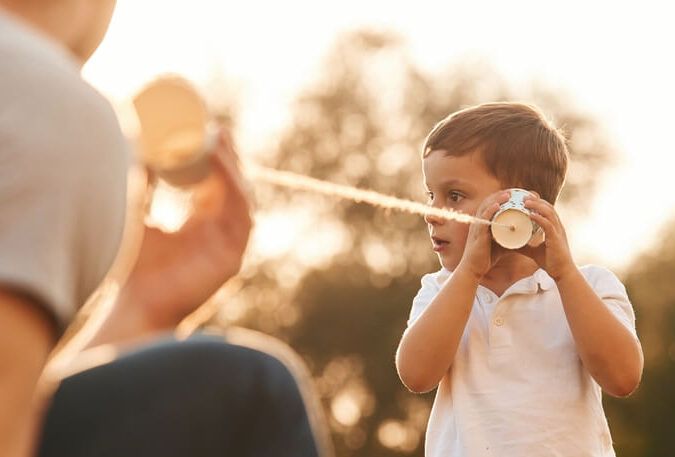
How Children Develop Social Communication Skills
At CPST Texas, led by Dr. Michelle Rinella, educational resources can help parents better understand the many ways children communicate, connect, and interact with the people around them. Social communication includes much more than speaking clearly. It involves using language, facial expressions, gestures, eye contact, tone of voice, and other behaviors to share information and navigate social situations.
Children develop these abilities at different rates, and there is a broad range of typical communication styles. Some children are naturally more reserved, need additional time to become comfortable in social settings, or communicate differently depending on the environment. However, persistent differences in social communication can sometimes be associated with developmental, behavioral, language, or learning needs. Understanding these differences can help families determine whether additional observation or professional guidance may be useful.
What Social Communication Differences Can Look Like
Social communication differences do not always appear as difficulty speaking. A child may have a large vocabulary and communicate effectively about preferred subjects while finding back-and-forth conversation more challenging. Another child may speak less frequently, have difficulty interpreting nonverbal signals, or struggle to adjust their communication based on the social situation.
These differences may become more noticeable as children grow and social expectations become more complex. School-age children, for example, are increasingly expected to understand conversational turn-taking, recognize humor or sarcasm, work cooperatively with peers, and interpret unwritten social rules. A child who communicated comfortably in early childhood may encounter new challenges when friendships and classroom interactions require more nuanced communication.
Why Context Matters When Observing Communication
A single behavior generally does not provide enough information to explain a child’s communication style. Avoiding eye contact, having difficulty joining group conversations, or preferring to talk about particular interests can occur for many reasons. Professionals therefore consider patterns of behavior rather than relying on one isolated characteristic.
A child’s age, developmental history, language abilities, cultural background, environment, attention, emotional well-being, and experiences can all influence communication. Differences may also occur alongside conditions such as autism spectrum disorder, attention-deficit/hyperactivity disorder, language disorders, or social anxiety. This is one reason parents should avoid trying to determine a diagnosis based solely on online symptom lists or comparisons with other children.
When an Evaluation May Provide More Information
Parents may consider discussing social communication concerns with a pediatrician, psychologist, speech-language pathologist, or another qualified professional when differences are persistent or interfere with a child’s daily functioning. Concerns may arise when a child consistently struggles to develop peer relationships, participate in conversations, interpret social cues, or communicate effectively across home, school, and community settings.
Depending on the concerns involved, a professional may recommend a broader assessment of the child’s development and functioning. A comprehensive psychological evaluation can examine multiple areas of functioning when a child’s difficulties are not easily explained by one factor. When social communication differences occur alongside characteristics commonly associated with autism, parents may also want to learn more about what is typically considered during autism evaluations.
Looking Beyond Labels to Understand the Whole Child
The purpose of examining communication differences is not simply to place a label on a child’s behavior. A thorough understanding can help clarify strengths as well as areas where additional support may be beneficial. One child may have excellent verbal knowledge but need help interpreting subtle social cues, while another may understand social interactions well but struggle to express thoughts quickly during conversations.
Information from parents, teachers, caregivers, and the child can provide important context. When appropriate, professionals may also consider language development, cognitive abilities, academic performance, attention, emotional functioning, and behavior. If attention and executive functioning appear to be contributing to difficulties during conversations or social situations, families may also find it helpful to learn about attention deficit evaluations and how attention-related concerns are assessed.
Supporting Communication Without Forcing a Particular Style
Children can benefit from supportive environments that allow them to practice communication without excessive pressure. Parents can model conversational turn-taking, explain confusing social situations, provide additional processing time, and ask open-ended questions about how their child interpreted an interaction. Books, games, shared activities, and everyday conversations can also provide natural opportunities to practice recognizing emotions and considering another person’s perspective.
It is equally important to recognize that effective communication does not look identical for every child. The goal should be to help children communicate their needs, understand others, and participate meaningfully in relationships while respecting individual differences. Families who have questions about social communication can use educational information from CPST Texas as a starting point for understanding development and deciding when conversations with qualified healthcare or developmental professionals may be appropriate.
Resources
American Psychiatric Association. (2022). Diagnostic and Statistical Manual of Mental Disorders (5th ed., text rev.). American Psychiatric Association Publishing.
American Speech-Language-Hearing Association. (n.d.). Social Communication Disorder. ASHA Practice Portal.
Centers for Disease Control and Prevention. (2025). Signs and Symptoms of Autism Spectrum Disorder. National Center on Birth Defects and Developmental Disabilities.